Home Blog Page 3

Demystifying Wire Transfers: Understanding the Latest Guidelines in Indian KYC

0
wire transfers

The Reserve Bank of India has recently made amendments to its master directions concerning KYC (Know Your Customer) norms. One notable aspect of these amendments is the clarification provided on the definition of Wire Transfer. The aim of this effort is to provide a clear understanding of what constitutes a Wire Transfer in the context of financial transactions.

By defining Wire Transfers, the Reserve Bank of India seeks to enhance transparency and promote adherence to KYC guidelines in the banking sector. This update is part of the ongoing efforts by the regulatory authority to strengthen the framework for combating financial crimes and ensuring the integrity of the financial system.

Batch transfer

The batch transfer is a transfer comprised of a number of individual wire transfers that are being sent to the same financial institutions but may/may not be ultimately intended for different persons.

Beneficiary

Beneficiary refers to a natural or legal person or legal arrangement who / which is identified by the originator as the receiver of the requested wire transfer.

Beneficiary Registered Entity

It refers to a financial institution, regulated by the RBI, which receives it  from the ordering financial institution directly or through an intermediary registered entity and makes the funds available to the beneficiary.

Cover Payment

Cover Payment refers to a wire transfer that combines a payment message sent directly by the ordering financial institution to the beneficiary financial institution with the routing of the funding instruction (the cover) from the ordering financial institution to the beneficiary financial institution through one or more intermediary financial institutions.

Cross-border wire transfer

Cross-border wire transfer refers to any wire transfer where the ordering financial institution and beneficiary financial institution are located in different countries. This term also refers to any chain of wire transfers in which at least one of the financial institutions involved is located in a different country.

Domestic wire transfer

Domestic wire transfer refers to any wire transfer where the ordering financial institution and beneficiary financial institution are located in India. This term, therefore, refers to any chain of it  that takes place entirely within the borders of India, even though the system used to transfer the payment message may be located in another country.

Intermediary RE

Intermediary RE refers to a financial institution or any other entity, regulated by the RBI which handles an intermediary element of it, in a serial or cover payment chain and that receives and transmits it on behalf of the ordering financial institution and the beneficiary financial institution, or another intermediary financial institution.

Ordering RE

Ordering RE refers to the financial institution, regulated by the RBI, which initiates it and transfers the funds upon receiving the request for a wire transfer on behalf of the originator.

Originator

Originator refers to the account holder who allows it from that account, or where there is no account, the natural or legal person that places the order with the ordering financial institution to perform it.

Serial Payment

Serial Payment refers to a direct sequential chain of payment where it  accompanied payment message travel together from the ordering financial institution to the beneficiary financial institution directly or through one or more intermediary financial institutions (e.g., correspondent banks).

Straight-through Processing

Straight-through processing refers to payment transactions that are conducted electronically without the need for manual intervention.

Unique transaction reference number

Unique transaction reference number refers to a combination of letters, numbers or symbols, determined by the payment service provider, in accordance with the protocols of the payment and settlement system or messaging system used for the wire transfer.

Wire transfer

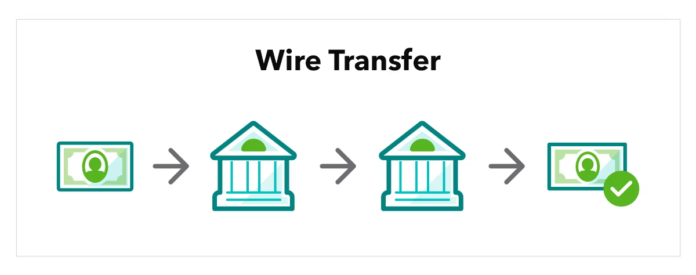
It refers to any transaction carried out on behalf of an originator through a financial institution by electronic means with a view to making a number of funds available to a beneficiary at a beneficiary financial institution, irrespective of whether the originator and the beneficiary are the same people.
Certified KYC Expert- An Ultimate Guide to Know Your Customer

2
Certified KYC Expert

The Certified KYC Expert Program is a comprehensive certification course. It is designed to equip analysts with the knowledge and skills necessary to effectively navigate the intricate landscape of Anti-Money Laundering (AML) and Know Your Customer (KYC) regulations. There is a significant rise in financial crimes. Customer due diligence has become a necessity. This program aims to create a pool of analysts to safeguard the integrity of financial institutions and ensure compliance with regulatory frameworks.

How old is Know Your Customer?

The history of “Know Your Customer” (KYC) dates back to the early 20th century. It started as a way to stop bad people from using banks for illegal activities like financial crimes. Criminals were using banks and other financial systems to hide where their illegal money came from. This worried the authorities, so they decided to do something about it.

There wasn’t one single event that made KYC necessary, but a lot of things happening at the same time. This included terrorist financing, money laundering, fraud cases, and financial crises.

The 9/11 terrorist attack was a significant event. It made governments realize how important it was to track and stop money from going to terrorist groups. So, they put strict rules in place, such as Anti-Money Laundering (AML) and Countering the Financing of Terrorism (CFT) measures, which included the KYC process. This attack showed how money and terrorism were connected through the financial system.

When KYC was introduced globally?

In 1989, the Financial Action Task Force (FATF) was created to make rules for stopping money laundering. After the 9/11 attacks in the United States in 2001, they made stronger rules for identifying customers and checking their backgrounds.

The USA PATRIOT Act is a law that was made after 9/11. It has rules to improve Anti-Money Laundering (AML) measures. One of the things it did was to create “customer identification programs” (CIPs). These programs help in making sure we know who our customers are.

The Basel Committee on Banking Supervision is a group that makes rules for banks around the world. They made a document in 2001 called “Customer Due Diligence for Banks.” This document said that banks need to know their customers, understand the risks, and do background checks.

These things made us realize the importance of “Know Your Customer” (KYC). KYC is important because it helps keep the financial system safe, stops bad activities, and protects the customers. But remember, KYC rules didn’t happen all at once. They got better over time because we want to keep money systems strong and customers safe.

What is the definition of Know Your Customer?

In simple terms, Know Your Customer is the process of confirming and identifying a business’s or institution’s clients. The goal of KYC is to ensure that businesses have enough information on their customers to manage risks, avoid fraud, and also complying with regulations, and keep their operations running smoothly.

What is the significance of Know Your Customer?

Risk Assessment

Know Your Customer allows organizations to measure the level of risk connected with their consumers. Businesses can discover and prevent potential money laundering, terrorist financing, fraud, in addition to illegal actions by confirming customer identities and doing due diligence.

Regulatory Compliance

Know Your Customer is essential for organizations to comply with numerous anti-money laundering (AML), counter-terrorism financing (CFT), and data protection laws and regulations. Moreover, regulatory authorities demand enterprises to establish rigorous KYC processes in order to avoid unlawful activity and maintain the integrity of the financial system.

Customer Protection

Know Your Customer protects customers by ensuring that their identities are not exploited fraudulently. It also assists businesses in verifying the legitimacy of their consumers and protecting their personal and financial information.

Reputation Management

Implementing good KYC standards aids organizations in maintaining their reputation and confidence among consumers, investors, and regulators. Businesses can gain confidence and establish deeper relationships by demonstrating a commitment to preventing financial crimes and maintaining compliance.

Enhanced Security

KYC assists clients in identifying and authenticating themselves, lowering the danger of unauthorized access, identity theft, and other forms of cybercrime. Businesses can improve the security of their systems and safeguard against fraudulent activity by employing effective identity verification and authentication methods.

Financial Institutions and the Importance of Know Your Customer

Financial institutions, including banks and insurers, play a pivotal role in the global economy. However, they are also prime targets for illicit activities such as money laundering and fraudulent transactions. Therefore, implementing robust KYC processes is essential. The Certified KYC Expert Program recognizes the significance of Know Your Customer requirements in mitigating risks associated with financial crimes. Participants of the program gain a deep understanding of customer activities, customer information, and beneficial owners, allowing them to effectively identify and assess potential risks, ensuring the integrity of financial transactions.

The Role of Certified KYC Expert in Preventing Financial Crimes

Financial crimes pose a significant threat to the stability and trustworthiness of the financial system. AML and KYC frameworks serve as the first line of defense against these crimes. The Certified KYC Expert Program emphasizes the interconnection between AML and KYC by providing in-depth training on AML principles and their application in KYC processes. Participants learn to identify red flags and suspicious activities, enabling them to detect and prevent illegal activities effectively. Through an understanding of verification processes, customer due diligence, and verification of identity, experts trained in the program can implement robust measures to combat financial crimes, safeguard financial institutions, and protect the interests of customers.

About Certified KYC Expert Course

Are you interested in becoming a KYC Expert? It’s an online training program that gives you a certificate once you complete it.

KYC Experts are really important in making sure that companies follow the rules about money laundering. Additionally, they help companies like banks, online payment, and shopping companies to understand who their customers are and make sure they’re not doing anything illegal with their money.

Indiaforensic made this program to help bank teams better understand and prevent money laundering. It’s all about getting to know your customers and checking that they’re doing things the right way.

Who Should Do Certified KYC Expert Course?

Though there is no restriction on who should do this course, it is most beneficial for entry-level professionals working for

  • Banking Companies
  • Non-Banking Finance Companies
  • Co-operative Banks
  • Captive Units of MNC Banks
  • Fintech Companies
  • Payment Gateways
  • Wallet Companies

Undertaking KYC CDD training also prepares compliance teams to meet increasing regulatory expectations. It helps them to establish a fundamental baseline of knowledge in the AML KYC Domain. We designed this program for entry-level professionals only.

Conclusion

As financial crimes continue to evolve, the need for Certified KYC Experts becomes increasingly vital. The Certified KYC Expert Program addresses this need by offering specialized training on AML and KYC, empowering professionals to combat financial crimes effectively. Through an in-depth exploration of customer due diligence, verification processes, and the significance of KYC documents, the program equips experts with the knowledge and skills necessary to protect financial institutions, ensure regulatory compliance, and foster trust within the industry. By producing certified professionals, the program contributes to the global fight against financial crimes and promotes the stability and integrity of the financial services sector.

5 Years of GDPR: Looking Back, Making Sense, and What’s Next

0
5 years of GDPR by Rispro

What is GDPR and When Did it Start?

5 years ago, in 2018, something important happened in the world of data protection. It’s called GDPR, which stands for General Data Protection Regulation. This is a set of rules made by the European Union (EU) to keep your personal information safe and give you more control over it. Let’s take a closer look at what these five years have meant for your data and privacy.

What’s Good About GDPR?

GDPR did some really good things for your data and privacy. It makes sure that companies treat your information with respect and let you know how they’re using it. This way, you can trust them more. It also gave you more rights, like being able to correct wrong information or even ask them to delete your data.

What’s Different After 5 Years?

Before GDPR, companies didn’t always tell you what they were doing with your data. Now, they have to explain it clearly, so you know what’s going on. This helps you understand and feel better about how your information is being used. Today, there are awareness programs spreading the importance of GDPR.

What Got Better?

Companies had to be more careful with your data. They improved their security to prevent bad people from stealing it. Also, if there’s ever a problem and your data gets exposed, they have to tell you about it. This makes sure you know what’s happening with your information.

What’s Hard About Following GDPR?

For businesses, following all the rules of GDPR can be tough. Sometimes, it’s hard for them to balance between following these rules and coming up with new ideas. It’s like trying to do two things at once.

Why Do Data Breaches Still Happen?

Even with GDPR, sometimes bad people can still get hold of your data. This is called a data breach. It’s something that everyone has to be careful about, even with the new rules in place. Riskpro has partnered with Regtechtimes to create a full length certification on Data Privacy

Why Is Sending Data Across Countries Tricky?

If your data needs to go to another country, things can get complicated. Each country might have its own rules, and companies need to make sure they’re following them all. This can make things a bit tricky.

How GDPR Changed Businesses

Companies had to do a lot to follow the new rules. They needed to have someone in charge of making sure they’re doing things right. This person is called a Data Protection Officer. They also had to change the way they work with data and tell you about it in clear language.

Did New Things Come Up?

Because of GDPR, companies started using new tricks to keep your data safe. They used special technology and made sure only the right people could see your information. This way, they could still use your data for good things without risking your privacy.

Was There a Cost to Following GDPR?

Yes, there was a cost, but there were good things too. Companies need to spend money to follow the rules and make sure your data is safe. But because they did this, your information became more secure, and you could trust them more.

What Will Happen Outside the EU?

The ideas from GDPR are spreading outside the EU. More countries are making similar rules to protect your data. So even if you’re not in Europe, these rules might still help keep your information safe. In 2023, India presented its Data Protection Bill.

What About New Technologies?

As new things like robots and smart devices come up, your data might be used in different ways. This is a challenge, and the people who make the rules will need to think about how to protect your privacy while still letting you enjoy these cool technologies.

How Will Data Protection Change in the Future?

In the next years, things will keep changing. More places might make new rules to protect your data. It’s important for companies to keep learning and adapting to these changes, so your information stays safe.

Looking Back and Ahead

So, 5 years have passed since GDPR started. It made sure your data is treated better, gave you more control, and pushed companies to do better with your information. As time goes on, it’s up to everyone to keep working together to make sure your privacy is respected and your data is protected.

Frequently Asked Questions

  1. What is GDPR, and when did it start?

    • GDPR stands for General Data Protection Regulation. It began in May 2018 to protect your personal data and privacy.
  2. How did GDPR change things for me?

    • GDPR made sure companies are clear about how they use your data and gave you more rights over your information.
  3. Why do data breaches still happen if there’s GDPR?

    • Even with GDPR, bad people can sometimes get your data. It’s a challenge to keep data safe.
  4. Did companies have to change anything because of GDPR?

    • Yes, they had to follow new rules, be more careful with your data, and explain things better.
  5. What’s coming next for data protection?

    • More countries might have rules like GDPR, and new technologies will need new ways to protect your data.
  6. Why is data protection important?

    • Data protection is about making sure your personal information is safe and that you have control over how it’s used.

Devastating Causes of Banking Crisis: Uncovering the Risks

1
banking crisis

A banking crisis occurs when many banks in a country are facing serious solvency or liquidity problems at the same time. This can be due to an outside shock or failure in one bank or a group of banks that spread to other banks in the system. A systemic banking crisis can lead to deep recessions and sharp current account reversals, and in some cases, can be contagious and spread to other countries.

Banks are exposed to a range of risks, including credit risk, liquidity risk, and interest rate risk. These risks can lead to a decrease in the value of a bank’s assets, which can result in the insolvency or technical insolvency. Banking problems can also be triggered or deepened by a lack of liquidity, where the bank does not have enough cash or other assets to satisfy liabilities.

Causes of Banking Crisis

The causes of banking crises are varied and can include unsustainable macroeconomic policies, excessive credit booms, large capital inflows, and balance sheet fragilities. Currency and maturity mismatches and off-balance sheet operations of the banking sector can also be prominent features. Let us take a close look at the causes of the banking crises.

Large Capital Inflows

In addition to currency risks, large capital inflows can also lead to the development of asset price bubbles. As foreign investors seek to take advantage of the country’s favorable economic conditions, they may invest heavily in the local stock market, real estate, or other assets. This influx of capital can drive up the prices of these assets beyond their fundamental values, creating a bubble that is unsustainable in the long run.

When these bubbles burst, as they often do, they can trigger a banking crisis. As asset prices decline, borrowers who used these assets as collateral for their loans may default on their debt, leading to a rise in non-performing loans and losses for banks. Moreover, as the value of the collateral declines, banks may find themselves with insufficient collateral to cover their loans, leading to a decline in their capital adequacy ratios and potentially resulting in insolvency. Thus, large capital inflows, while potentially beneficial in the short term, can pose significant risks to the financial system and contribute to banking crises.

Unsustainable Policies

Unsustainable macroeconomic policies refer to economic policies that are not viable in the long run and can lead to imbalances in the economy. These policies can include but are not limited to, government overspending, loose monetary policies, and inconsistent regulations.

Government overspending occurs when the government spends more than it collects in taxes and other revenues, resulting in budget deficits. While budget deficits are not necessarily bad in the short term, they can become unsustainable if they persist over the long term, leading to rising government debt levels.

Loose monetary policies refer to when a central bank attempts to stimulate the economy by increasing the money supply and reducing interest rates. While this can help boost economic growth in the short term, it can also lead to inflation and a devaluation of the currency over the long term.

Currency Mismatches and Banking Crisis

Currency mismatches occur when banks have assets and liabilities denominated in different currencies, and a change in exchange rates can cause a significant impact on the bank’s financial position. For example, if a bank has liabilities in a foreign currency and the value of that currency falls sharply, the bank’s liabilities increase in value relative to its assets, leading to potential insolvency. Similarly, if a bank has assets in a foreign currency and the value of that currency falls, the value of those assets decreases, potentially leading to losses.

Maturity Mismatches

Maturity mismatches occur when a bank has short-term liabilities (such as deposits) and long-term assets (such as loans). If a large number of depositors demand their money back at the same time, the bank may not have enough liquid assets to meet those demands, potentially leading to illiquidity or insolvency.

Off-Balance sheet Operations

Off-balance sheet operations refer to activities that banks engage in that are not recorded on their balance sheets, such as loan guarantees or derivatives contracts. These activities can expose banks to significant risks that may not be immediately apparent. For example, if a bank guarantees a loan that goes bad, the bank may be liable for the full amount of the loan, even though the loan is not recorded on the bank’s balance sheet.

During a banking crisis, these risks can become magnified, leading to significant losses for banks and potentially spreading to other parts of the financial system. As a result, regulators and policymakers need to be aware of these risks and take steps to mitigate them to prevent or minimize the impact of banking crises.

Predicting banking crises is difficult, but certain variables such as high leverage and rapid credit growth can indicate an increased likelihood of a crisis. However, having the professionals like Certified Bank Forensic Accountants may help the banks to identify the problems at an early stage.

Role of a CBFA in the Banking Crisis

A certified bank forensic accountant plays a crucial role in investigating and mitigating banking crises. They use their specialized knowledge and skills to examine the financial records and transactions of banks and financial institutions to identify any irregularities or fraudulent activities.

In the event of a banking crisis, a certified bank forensic accountant may be called upon to perform a detailed analysis of the bank’s financial records and identify any potential areas of risk or mismanagement. They may also be responsible for developing strategies to mitigate the impact of the crisis and prevent it from spreading.

Certified bank forensic accountants can work closely with regulators, government agencies, and other stakeholders to ensure that the crisis is contained and that appropriate measures are taken to prevent similar situations from occurring in the future. They may also provide expert testimony in legal proceedings related to the crisis.


Regulation and supervision of banks have gradually improved since the global financial crisis, with changes such as increasing capital ratios and strengthening resolution regimes. However, private sector incentives to monitor banks’ risks have been weakened by some policy interventions during the crisis. There is scope for strengthening regulation and supervision as well as private sector incentives to monitor risk-taking.

The Downfall of Credit Suisse: Lessons Learned

0
credit suisse collapse

Credit Suisse’s collapse is a jolt to a 167-year-old Swiss banking system. It was one of the biggest financial institutions in the world and the second-largest lender in Switzerland. It was classified as a global systemically important bank (GSIB), indicating its crucial role in the global financial system.

However, a series of regulatory issues, reputation, and financial losses resulted in its collapse and subsequent merger with UBS, the largest lender in Switzerland.

Timeline of Credit Suisse Collapse

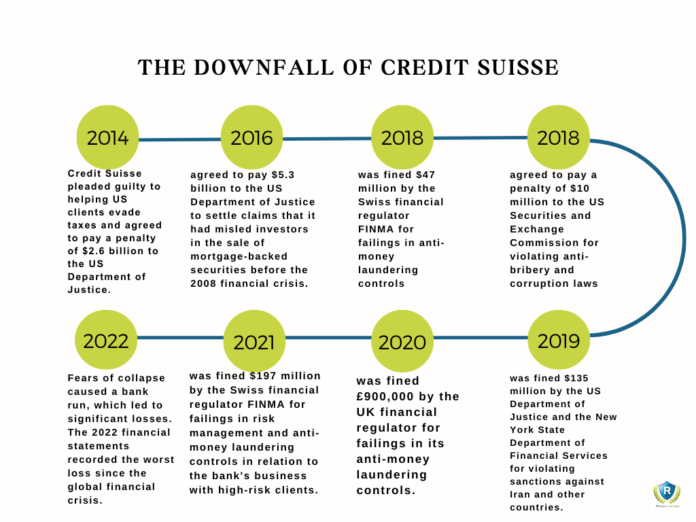
Here are some important regulatory penalties and its compliance failure Timeline of Credit Suisse:

  • 2014: Credit Suisse pleaded guilty to helping US clients evade taxes and agreed to pay a penalty of $2.6 billion to the US Department of Justice.
  • 2016: Credit Suisse agreed to pay $5.3 billion to the US Department of Justice to settle claims that it had misled investors in the sale of mortgage-backed securities before the 2008 financial crisis.
  • 2018: Credit Suisse was fined $47 million by the Swiss financial regulator FINMA for failings in anti-money laundering controls in its foreign exchange business.
  • 2018: Credit Suisse agreed to pay a penalty of $10 million to the US Securities and Exchange Commission for violating anti-bribery and corruption laws in its investment banking business.
  • 2019: Credit Suisse was fined $135 million by the US Department of Justice and the New York State Department of Financial Services for violating sanctions against Iran and other countries.
  • 2020: Credit Suisse was fined £900,000 by the UK financial regulator for failings in its anti-money laundering controls.
  • 2021: Credit Suisse was fined $197 million by the Swiss financial regulator FINMA for failings in risk management and anti-money laundering controls in relation to the bank’s business with high-risk clients.
  • 2022: Fears of collapse caused a bank run, which led to significant losses. The 2022 financial statements recorded the worst loss since the global financial crisis.

Public confidence in Credit Suisse collapsed after the bank acknowledged “material weaknesses” in its bookkeeping practices. As a result, people began withdrawing their money, causing Credit Suisse’s stock to plunge by 30%. To maintain liquidity, Credit Suisse secured a $54 billion loan from the Swiss National Bank, but it was not enough to stop the “bleeding.” Eventually, UBS agreed to buy Credit Suisse for more than $3.25 billion.

Tax Evasion Services

The Credit Suisse Collapse highlights the negative power of bad risk management, transparency, and reputation. Credit Suisse’s troubles began with its involvement in allowing U.S. clients to evade taxes in 2014, which resulted in a hefty penalty.

Credit Suisse helped wealthy clients evade taxes by providing them with a range of services that allowed them to hide their assets and income from US tax authorities. Some of the methods used by Credit Suisse to facilitate tax evasion included creating sham entities and maintaining secret accounts.

One example of Credit Suisse’s involvement in tax evasion was the case of Roger Schaerer. He was a former Credit Suisse banker who pleaded guilty in 2014 to helping US clients evade taxes. He reportedly advised clients to carry cash in small amounts on trips to Switzerland. He helped deposit it into their Swiss bank accounts to avoid detection by US customs officials.

Schaerer’s actions were part of a broader pattern of behavior by Credit Suisse to help wealthy clients evade taxes.

Role in the Financial Crisis of 2008

In 2016, Credit Suisse agreed to pay a penalty of $5.3 billion to the US Department of Justice (DOJ) to settle claims that it had misled investors in the sale of residential mortgage-backed securities (RMBS) before the 2008 financial crisis. RMBS are securities that are backed by a pool of mortgages and were a significant contributor to the financial crisis.

The DOJ alleged that Credit Suisse had made false and misleading statements about the quality of the mortgages underlying the RMBS it sold, and had concealed the risks associated with those securities. These allegations included claims that Credit Suisse had knowingly sold RMBS containing loans that did not meet underwriting guidelines, and had provided inflated appraisals for the underlying properties.

The settlement represented one of the largest fines ever paid by a bank for misconduct related to the sale of mortgage-backed securities. In addition to the penalty, Credit Suisse also agreed to provide $2.8 billion in consumer relief to assist homeowners who were harmed by the conduct at issue.

The settlement was part of a broader effort by the DOJ to hold financial institutions accountable for their role in the financial crisis. Other banks, including JPMorgan Chase, Bank of America, and Goldman Sachs, also paid multi-billion dollar fines to settle similar claims.

The settlement highlighted the legal and reputational risks associated with misconduct in the sale of complex financial products and underscored the importance of robust due diligence, risk management, and compliance programs in the financial industry.

Violation of AML Guidelines

FINMA’s investigation found that Credit Suisse had failed to adequately identify and document the beneficial owners of accounts, failed to monitor and report suspicious transactions, and lacked appropriate internal controls and risk management processes in its foreign exchange business.

These failings were deemed to be particularly serious given the significant risks associated with the foreign exchange business, including the potential for money laundering and terrorist financing.

It’s worth noting that foreign exchange transactions are often used in money laundering schemes due to the ability to transfer large sums of money across borders quickly and with minimal regulatory oversight. Therefore, financial institutions engaged in foreign exchange transactions are subject to heightened scrutiny and regulatory requirements related to combating money laundering and other financial crimes.

FCPA violations

Credit Suisse provided employment opportunities and other benefits to family members of foreign government officials in order to win business in the Asia-Pacific region. This practice was found to be in violation of the Foreign Corrupt Practices Act (FCPA), which prohibits companies from offering bribes or other inducements to foreign officials in exchange for business.

The SEC’s investigation found that Credit Suisse had failed to implement adequate internal controls to prevent unlawful payments and did not properly train its employees on FCPA compliance.

Sanctions Violations

According to the settlement agreement, between 2002 and 2008, Credit Suisse engaged in a scheme to process transactions involving Iranian and other sanctioned entities, using methods designed to conceal their involvement and evade detection by US authorities. The bank used a variety of techniques, such as removing or altering information in wire transfer messages and structuring transactions in smaller amounts to avoid triggering sanctions-related alarms.

The DOJ and DFS alleged that Credit Suisse’s conduct violated various US sanctions programs, including those related to Iran, Sudan, Libya, and Burma. The settlement also resolved claims that the bank had violated New York State law by failing to maintain adequate controls and procedures to detect and prevent such conduct.

Luckin Coffee Scandal

The 2019 accounting scandal at Luckin Coffee further damaged Credit Suisse’s reputation. In 2020, the bank’s covert surveillance operation led to the resignation of the CEO, which again impacted its reputation.

Archegos Capital

The collapse of the US hedge fund Archegos Capital in 2021 was the most significant financial loss for Credit Suisse. The bank lost $5.5 billion in the scandal, which resulted in executives’ resignations and significant changes to Credit Suisse’s risk management policies.

Credit Suisse Collapse & Rumors

However, despite these changes, fears of collapse caused a bank run in 2022, which further damaged Credit Suisse’s reputation and led to significant losses.

Credit Suisse’s collapse proves that no financial institution is “too big to fail.” It is essential to have effective risk management policies and to ensure transparency to maintain public confidence. Financial institutions must act in the best interest of their clients and maintain their reputations to avoid significant financial losses. The lessons learned from Credit Suisse collapse should serve as a warning to banks to prioritize risk management function.

Financial institutions must learn from Credit Suisse’s mistakes and take proactive measures to maintain public confidence and ensure long-term sustainability. Certified Bank Forensic Accountant course offered by Riskpro Learning covers the global banking crisis and its causes in its syllabus.

The Credit Suisse collapse also highlights the need for effective regulation to prevent banks from engaging in risky activities.

Combating Money Laundering with FATCA: Promoting Transparency and Global Cooperation

0
FATCA

Money laundering is the process of concealing the proceeds of illegal activity and making them appear legitimate. It is a serious crime that has serious consequences for society, including funding terrorism, drug trafficking, and other criminal activities. Recently there has been a remarkable increase in the automated interchange the financial information between the tax administration.

Introduction to FATCA

FATCA stands for Foreign Account Tax Compliance Act, which is a United States federal law that was enacted in 2010 to prevent offshore tax evasion by U.S. taxpayers. The law requires foreign financial institutions to report information about financial accounts held by U.S. taxpayers to the Internal Revenue Service (IRS).

Under FATCA, foreign financial institutions (FFIs) must enter into agreements with the IRS to identify and report on their U.S. account holders. FFIs that fail to comply with FATCA may face a 30% withholding tax on certain U.S.-source payments.

The law also requires U.S. taxpayers to report their foreign financial accounts to the IRS on an annual basis, and failure to do so can result in significant penalties.

FATCA has had a significant impact on the global financial industry, as financial institutions around the world have had to implement new procedures to comply with the law’s reporting requirements. The law has also led to increased cooperation among tax authorities around the world, as many countries have signed intergovernmental agreements with the U.S. to facilitate compliance with FATCA.

Objectives of FATCA

FATCA has imposed encumbrances on the monetary payers to protect the US Tax Base.  The primary objectives of the Foreign Account Tax Compliance Act (FATCA) are to:

  • Identify and prevent offshore tax evasion by U.S. taxpayers

One of the main goals of FATCA is to prevent U.S. taxpayers from hiding assets and income in offshore accounts in order to evade taxes.

  • Promote transparency and global cooperation in tax matters

FATCA aims to promote greater transparency and cooperation among countries in the area of tax enforcement. The law has led to increased information sharing between the U.S. and other countries, as many countries have signed intergovernmental agreements with the U.S. to facilitate compliance with FATCA.

  • Level the playing field for U.S. taxpayers who comply with their tax obligations

FATCA aims to ensure that U.S. taxpayers who comply with their tax obligations are not put at a disadvantage relative to those who seek to evade their taxes by hiding assets offshore.

  • Increase revenue collection for the U.S. government

By identifying and reporting on the financial accounts of U.S. taxpayers held abroad, FATCA is expected to increase revenue collection for the U.S. government.

The importance of anti-money laundering (AML) procedures in combating financial crimes

Anti-money laundering (AML) procedures are put in place to prevent, detect and report money laundering activities. The importance of these procedures in combating financial crimes cannot be overstated, as they are essential for maintaining the integrity of the financial system and preventing the funding of illegal activities.

One of the key benefits of AML procedures is that they help to identify the source of funds and ensure that they come from a legitimate source. This can prevent money laundering at the source and reduce the risk of other illegal activities being funded by the proceeds of crime.

AML procedures also help to detect suspicious activities and transactions. This is done through the implementation of customer due diligence measures, which require financial institutions and businesses to identify and verify the identities of their customers, and transaction monitoring, which involves the tracking of financial transactions to detect unusual patterns or activities.

Technology has also played an important role in the development of AML procedures. Advances in artificial intelligence and machine learning have enabled financial institutions.

In conclusion, FATCA is an important tool in the global fight against money laundering. By increasing transparency in the financial system, providing law enforcement agencies with important information, and requiring FFIs to implement AML procedures, FATCA is helping to combat money laundering and other forms of financial crime.

Impact of FATCA on Combatting Money Laundering

One of the ways that FATCA is combatting money laundering is by increasing transparency in the financial system. By requiring FFIs to report information about U.S. taxpayers’ accounts, it is making it more difficult for individuals to hide their money in offshore accounts. This increased transparency is particularly important in the fight against money laundering, which often involves complex networks of offshore accounts and shell companies.

Therefore, FATCA has had a significant impact on combatting money laundering by promoting greater transparency, global cooperation, and compliance with AML procedures.

By increasing the detection and reporting of suspicious activities,it has helped to prevent the funding of illegal activities such as drug trafficking and terrorism. The law has also created a level playing field for U.S. taxpayers who comply with their tax obligations and increased revenue collection for the U.S. government.

Overall, FATCA is a vital tool in the fight against money laundering and financial crimes, and its importance cannot be overstated in maintaining the integrity of the financial system and protecting society from the harms of illegal activities.

error: Content is protected !!